


Gemini Live retirement: what changes for voice agents on 17 November
Google retires the Gemini API's preview Live and TTS models on 17 November 2026. Swapping in Gemini 3.8 Live is a one-line change; its new defaults for tool calls, silence and TTS prompts are not. Here is what changes, which date applies on which surface, and how to re-test each agent.

Voice AI for BPOs and contact centers: sell outcomes, not seats
For a BPO, voice AI is a commercial decision before it's a technology one. Put the AI tier where clients get nothing today (overflow, after-hours, callbacks, quality review), price it on resolved outcomes, and work out your containment floor before you quote: a transferred call costs more than a human-only one, so break-even sits higher than most teams assume.

Speech-to-speech vs pipeline voice AI: choose per call, not per platform
Speech-to-speech and pipeline voice agents are no longer separated by latency. After eight days in which every pipeline stage gained a faster model and speech-to-speech systems stopped blocking on reasoning, the choice comes down to which guarantees a call needs. Here is what each path can't do, from running both in production, and a rule for choosing per call type.

Voice AI for home services: triage first, book second
In home services, a voice AI agent earns its place on the calls nobody can pick up, and its first job on those calls is triage, with booking second. Sort every call into one of four lanes (safety, emergency dispatch, routine booking, not a new job), give each its own ending, and design for the moment the on-call phone doesn't answer.

Voice AI for travel: build the agent for disruption day
Voice AI earns its place in travel on the day a trip goes wrong, when call volume jumps and the phone queue fails. Build the agent for that day: call the travellers your notices missed, recognise the booking without asking anyone to spell a reference, offer only what your reservation system returns, and keep entitlement rules out of the model.

TRAI's A2P call rules for AI voice agents: declare the numbers, fix the behaviour
TRAI's Third Amendment, notified on 18 September 2026, doesn't ban AI calls in India or make agents announce themselves. It makes outbound automated calls declarable: you tell your operator which number ranges carry them, and operators' detection systems watch how those numbers behave. Here's what the text says, the three dates, and the campaign changes that keep your numbers clean.

Voice AI for university admissions: stop summer melt
Voice AI does its most valuable work in university admissions after the offer. The students you lose are admits who never arrive, stalled by a missing document, a finance question or a visa delay. Here's how to call every admit against your deadline calendar, get past call screening, route each blocker to the right office and measure melt honestly.

Voice AI for edtech: automate the follow-through, not the pressure
Voice AI earns its place in edtech by owning the follow-through counsellors can't keep up with: calling every enquiry fast, reaching the parent who actually decides, getting booked learners to their demo class and chasing paperwork. Used to scale pressure-selling, it backfires. Here's the playbook, the guardrails and a model to prove the impact.

Voice AI for lead qualification: design the scorecard before the script
Voice AI qualifies leads well when you treat qualification as a data problem, not a script problem: define a typed scorecard, capture each answer the moment it's given, give every outcome a destination, and audit the agent's verdicts against your reps every week. Here's the playbook, and the metric most teams get wrong.

AI voice agents for logistics & supply chain: keep every shipment moving
An AI voice agent for logistics keeps shipments moving by automating the phone work that decides your on-time and first-attempt delivery rates: pre-dispatch delivery verification, a 24/7 driver hotline for delays and gate codes, address correction, COD amount confirmation, and high-volume driver and warehouse hiring screens. It runs 24/7, in the caller's language, at a fraction of a loaded human cost per call. Here are the use cases, a savings model, and the benchmarks that prove it out.
AI voice agents for insurance: renewals, claims & lead qualification
An AI voice agent for insurance automates the high-volume phone work that decides your loss ratio and retention: policy-renewal reminders and premium collection, new-lead qualification, claim intimation and status, KYC and document follow-ups, and lapsed-policy reactivation — 24/7 and in the customer's language, at a fraction of a loaded human cost per minute. Here are the use cases, a savings model, and the benchmarks that prove it out.
AI voice agents for e-commerce & retail: recover carts, deflect support
An AI voice agent for ecommerce recovers abandoned carts, answers "where is my order" calls, verifies COD orders and handles returns — automatically, 24/7, at a fraction of a loaded human cost per minute. Here are the highest-ROI use cases, a savings model you can plug your own numbers into, and the benchmarks that tell you it's working.
AI voice agents for real estate: qualify leads & book site visits
An AI voice agent for real estate calls every new portal and web lead within seconds — qualifying budget, location and intent, booking site visits straight into your team's calendar, and chasing undecided buyers until they commit. The result: faster speed-to-lead, more site visits booked, and no hot enquiry left to go cold overnight.
AI voice agents for healthcare & clinics: scheduling, reminders & ROI
An AI voice agent for healthcare and clinics answers and makes patient calls at scale — booking and rescheduling appointments, running no-show reminders, doing post-op and wellness check-ins, answering clinic FAQs and chasing billing — so front desks stop drowning in phone traffic, fewer slots go empty, and staff focus on patients in the room.
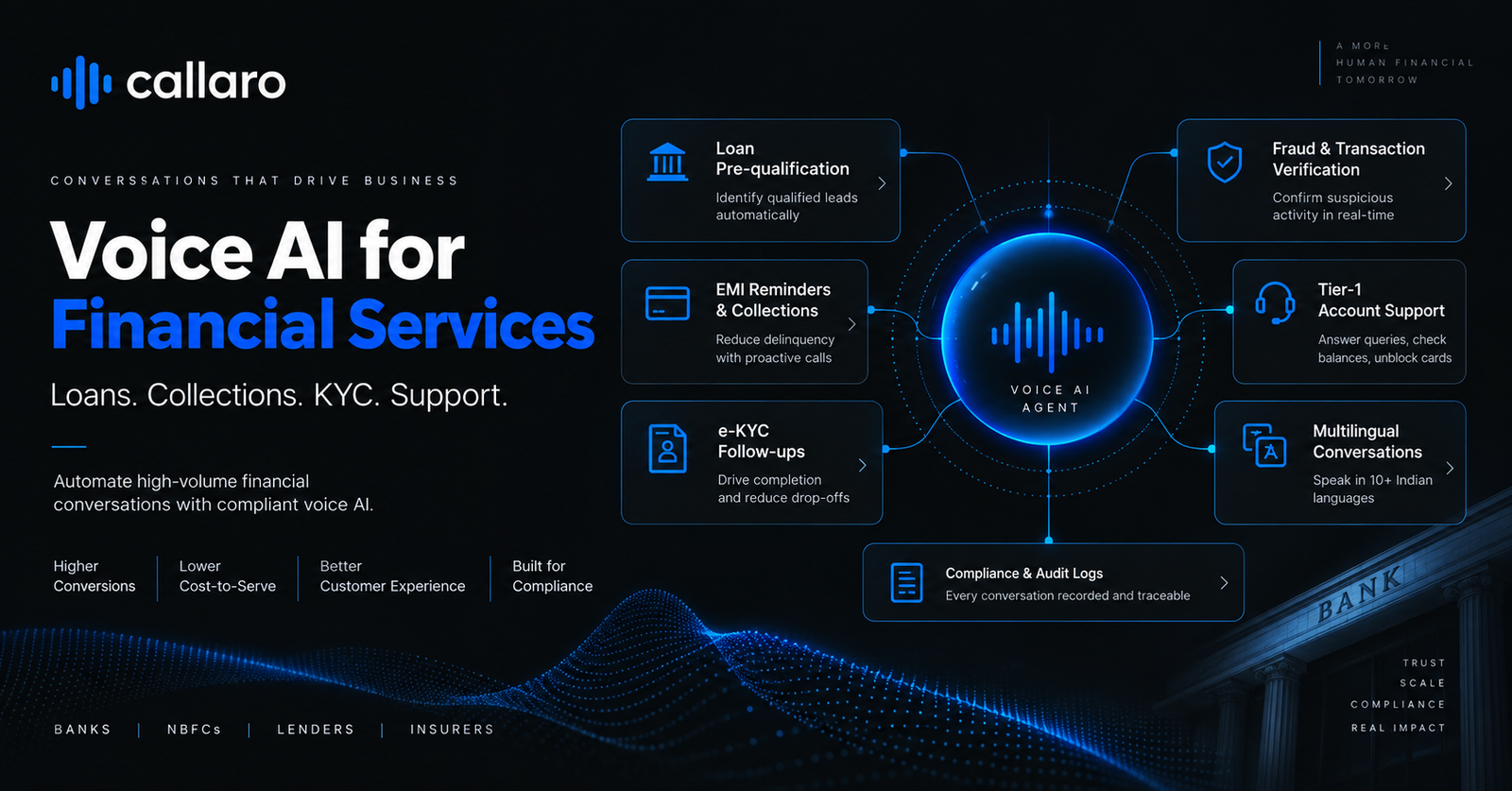
AI voice agents for financial services (BFSI): use cases, ROI & benchmarks
An AI voice agent for financial services makes and answers phone calls at scale — pre-qualifying loans, chasing EMI and payment reminders, following up on e-KYC, verifying transactions and handling tier-1 account queries — so BFSI teams reach more customers, collect faster and cut cost-to-serve, typically at a fraction of the cost of a live agent minute.
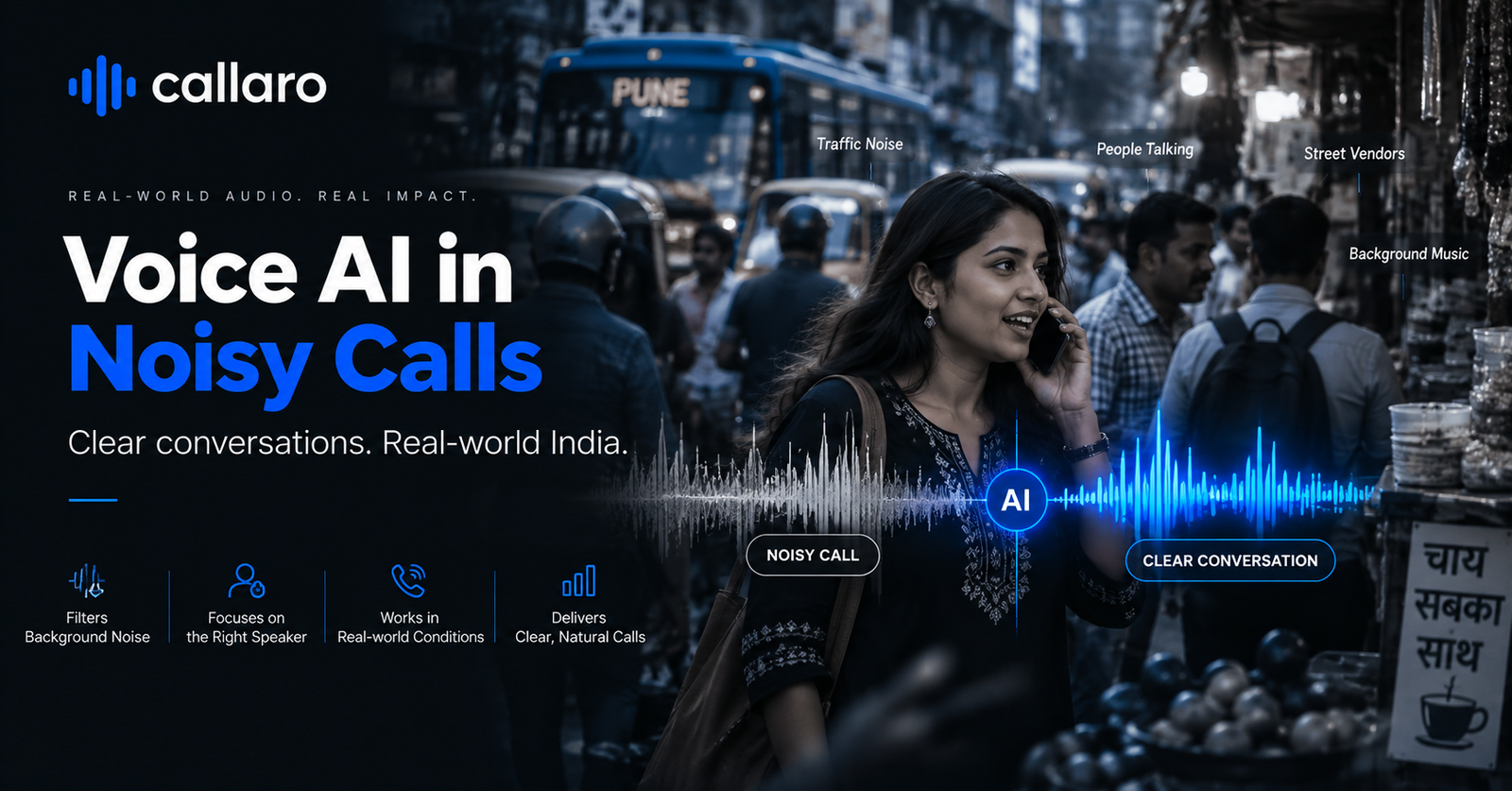
Noisy calls, clear agents: how voice AI survives real-world (and Indian) phone audio
Real phone audio is nothing like a demo mic. Street noise, a TV in the next room, two people talking, and low-bitrate carrier codecs all conspire to break naive voice AI. Here's the actual DSP — echo cancellation, a dual-path denoiser design, VAD tuning, and background-media rejection — that keeps an agent clear on messy Indian PSTN calls without clipping soft speech.
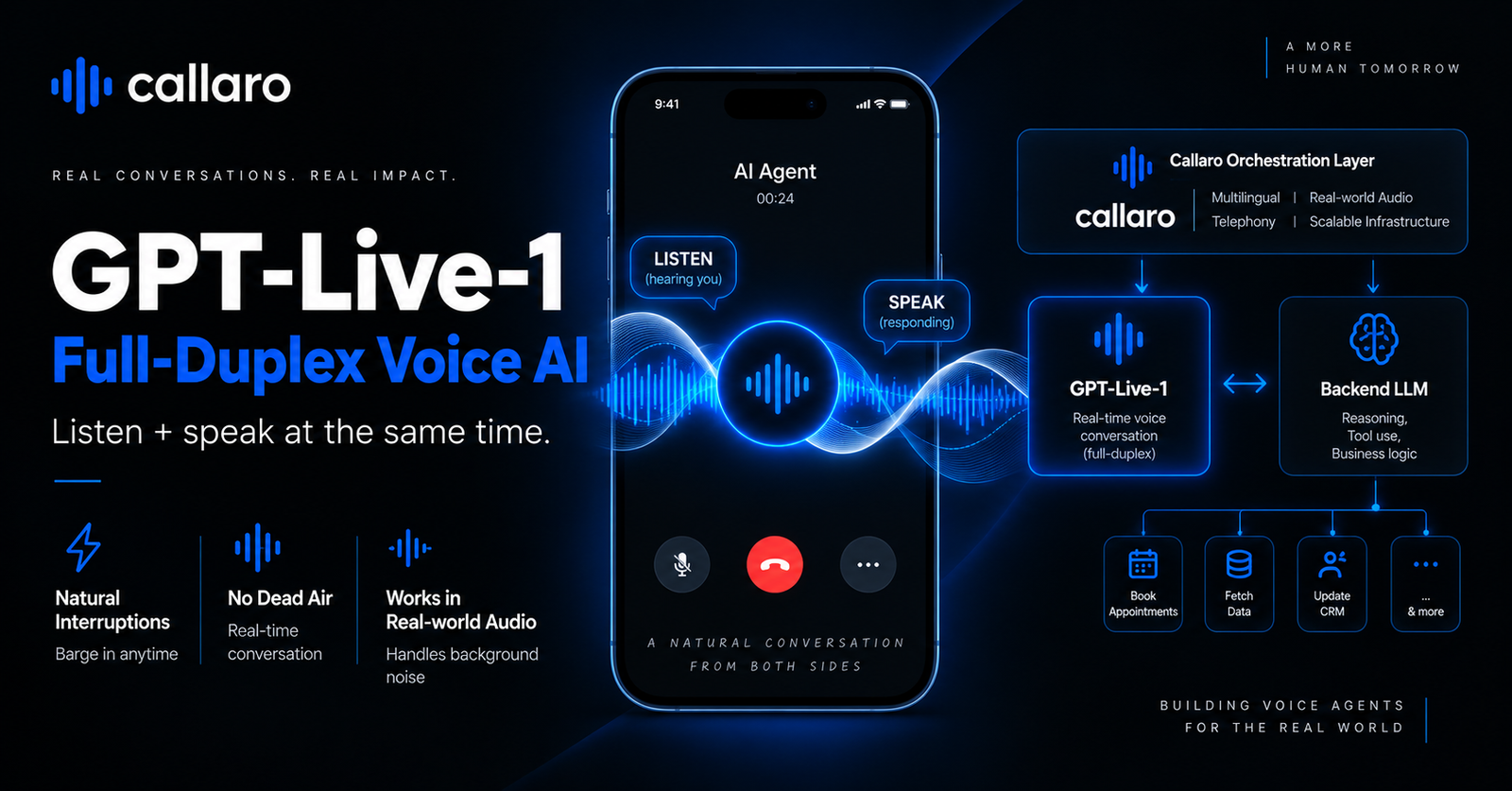
GPT-Live-1: full-duplex voice AI, and why Callaro was live with it on day one
OpenAI launched GPT-Live-1 on September 10, 2026 — a full-duplex speech model that listens and speaks at the same time and delegates reasoning to a backend of your choosing. Callaro has run it in production since launch day. Here's what full-duplex changes, and why it makes for the most natural AI voice agent yet.
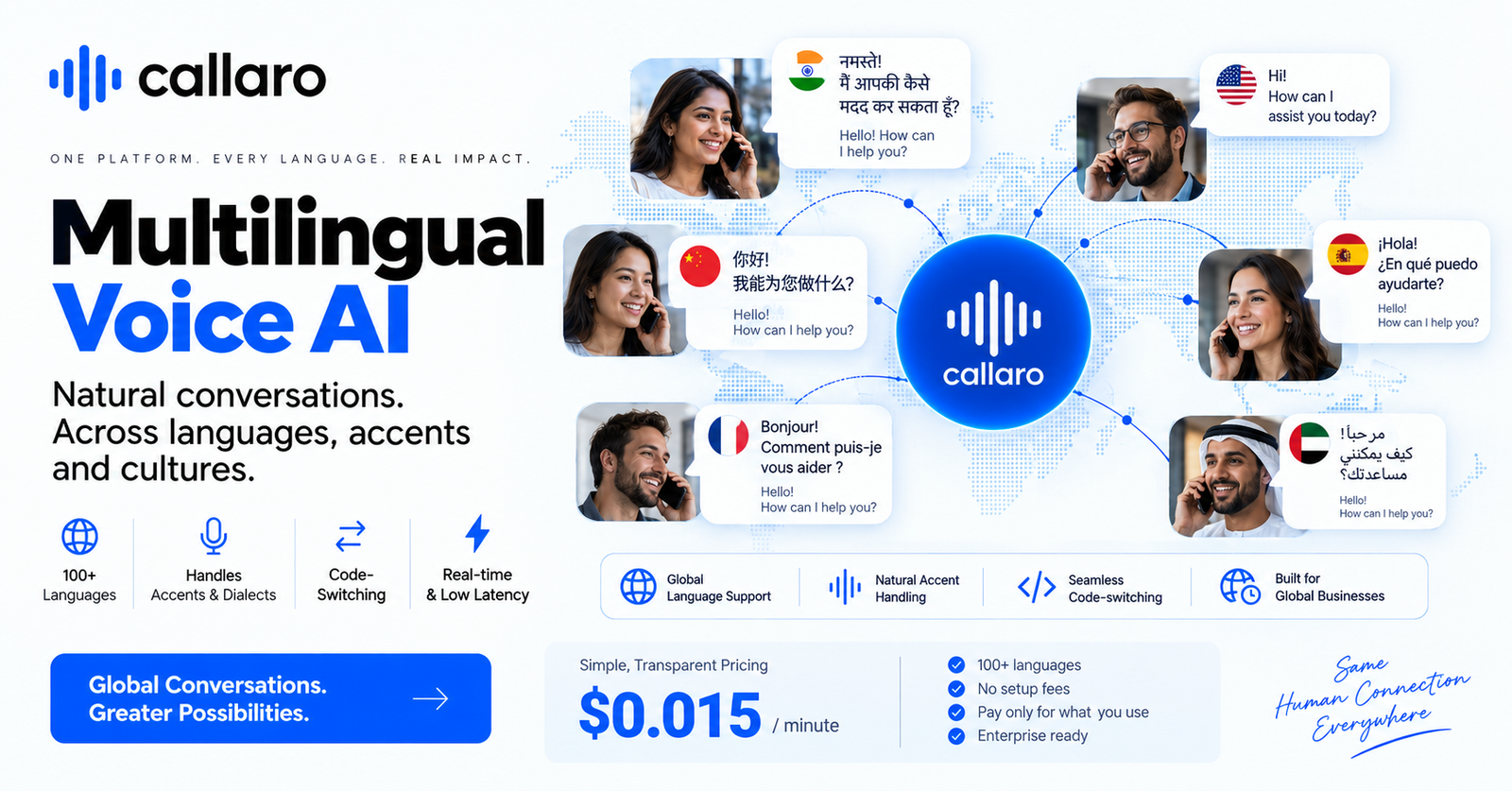
Multilingual voice AI: handling accents and code-switching
The hard part of multilingual voice AI isn't translating between languages — it's handling one caller who speaks accented English, switches to Hindi mid-sentence, and expects the agent to keep up. Here's why accents and code-switching break naive systems, the difference between native language packs and accented English, and how to actually evaluate multilingual quality.
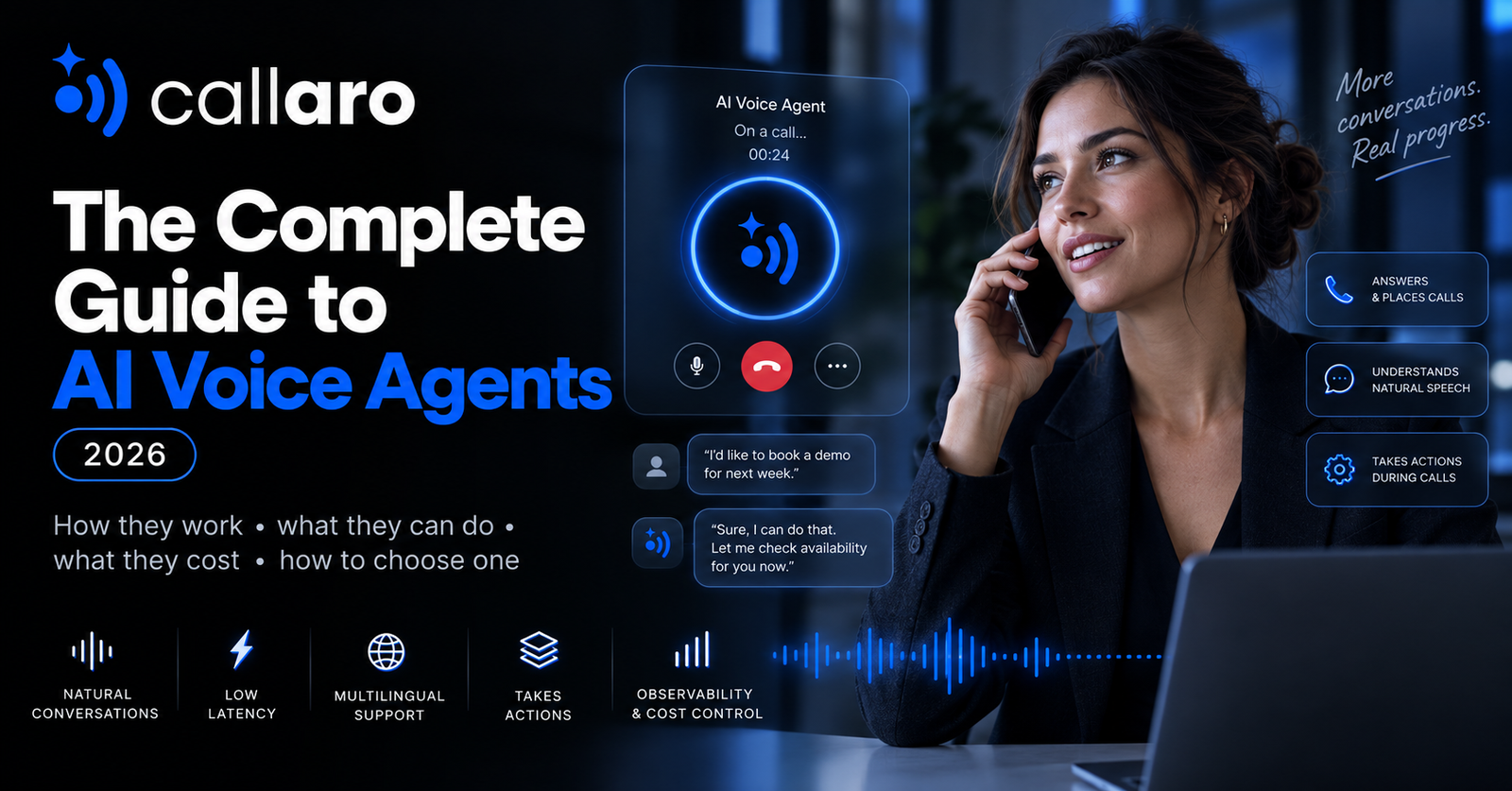
The complete guide to AI voice agents (2026)
An AI voice agent is software that answers or places phone calls, understands natural speech, and replies in a natural voice in real time — completing real tasks without a human on the line. This guide explains how they work, what they can do, the capabilities that separate a demo from a production system, what they cost, and how to choose one.
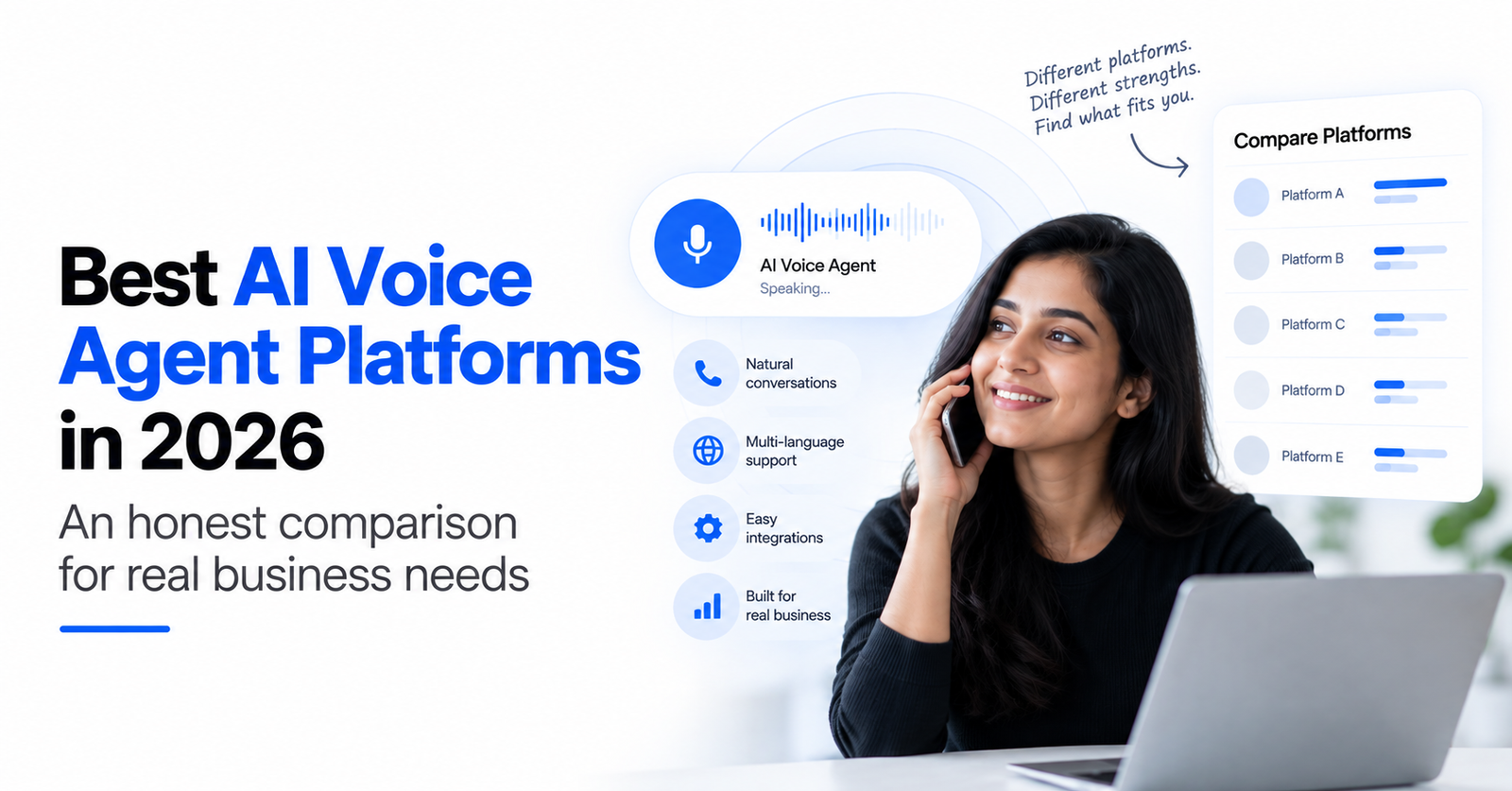
Best AI voice agent platforms in 2026: an honest comparison
There is no single best AI voice agent platform in 2026 — there's a best one for your use case. Vapi, Retell, Synthflow, Bolna, Ringg.ai, and Callaro all solve the problem differently, trading off developer control, ease of use, transparency, multilingual depth, and white-label. This is a criteria-first comparison so you can pick well, not a leaderboard.
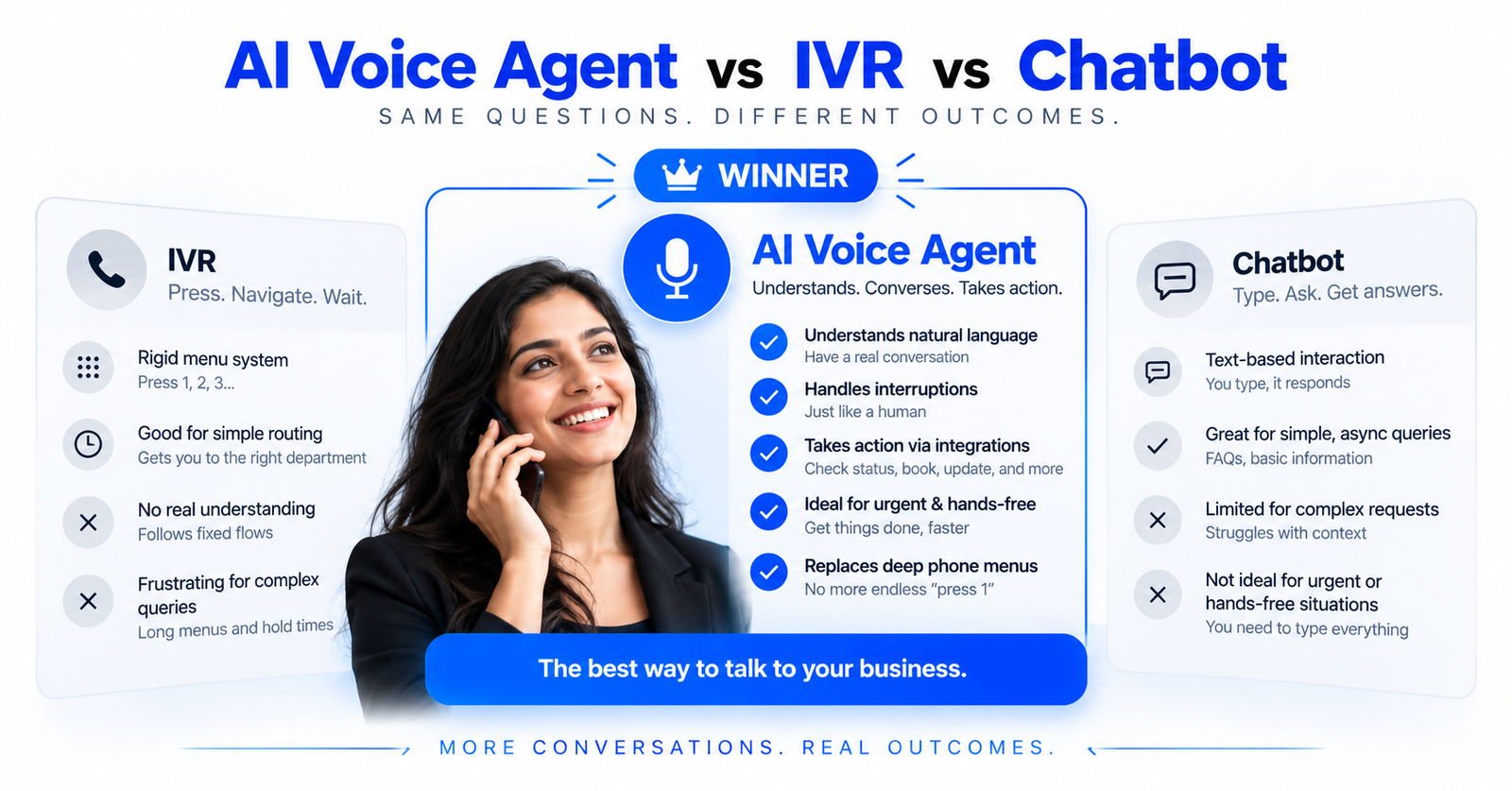
AI voice agent vs IVR vs chatbot: what's the difference?
An AI voice agent holds a natural spoken conversation and takes actions on the phone; an IVR is a rigid press-1 menu tree; a chatbot handles the same kind of natural conversation but in text, not voice. Use an IVR only for simple deterministic routing, a chatbot for asynchronous text support, and a voice agent when callers want to speak and get something done.
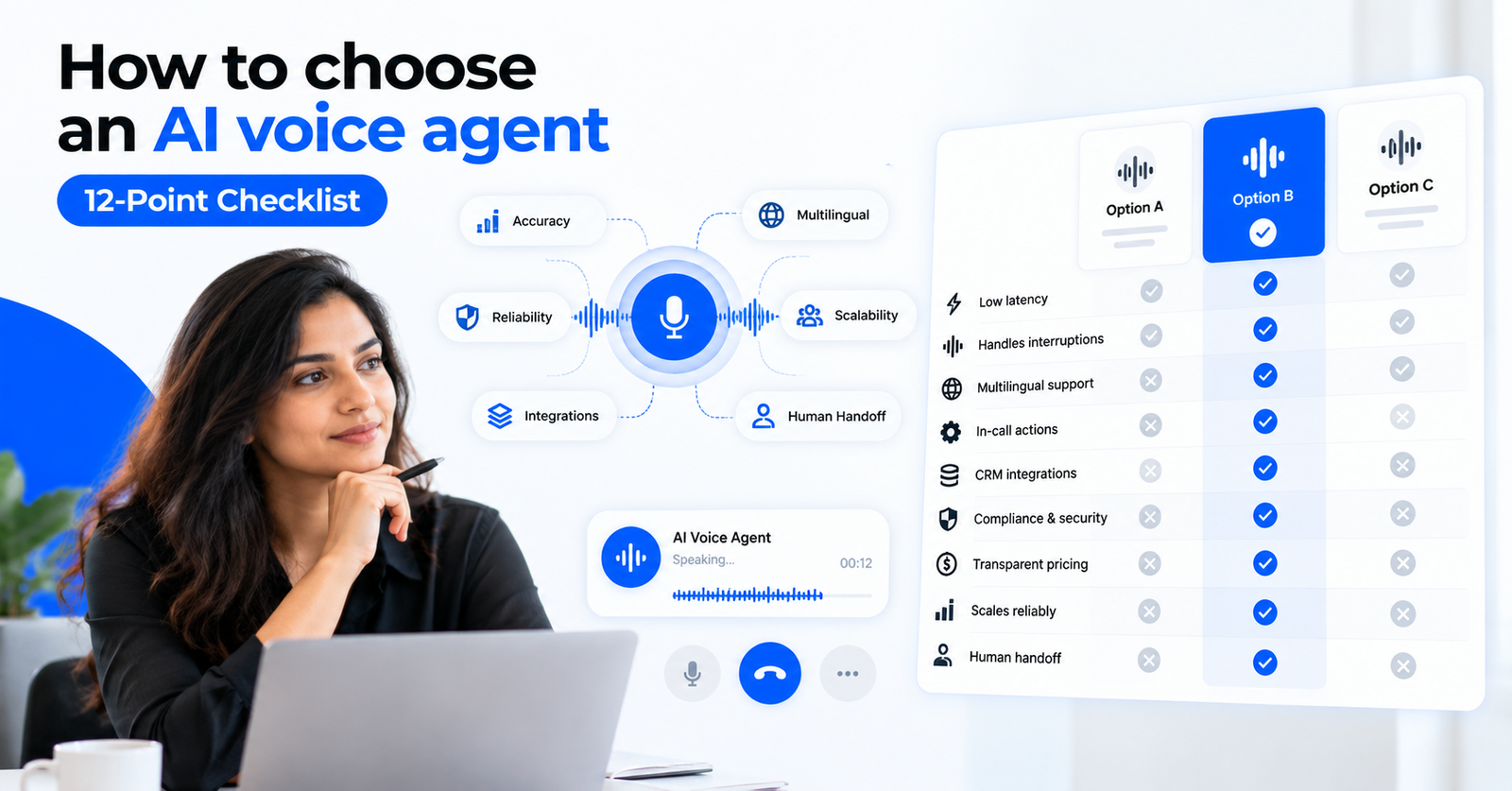
How to choose an AI voice agent: a 12-point checklist
Choose an AI voice agent by testing it against production reality, not the demo: latency under load, voicemail and interruption handling, model choice, multilingual quality, in-call actions, integrations, compliance, observability, transparent pricing, concurrency, and clean human handoff. This 12-point checklist gives you the exact questions to ask each vendor.
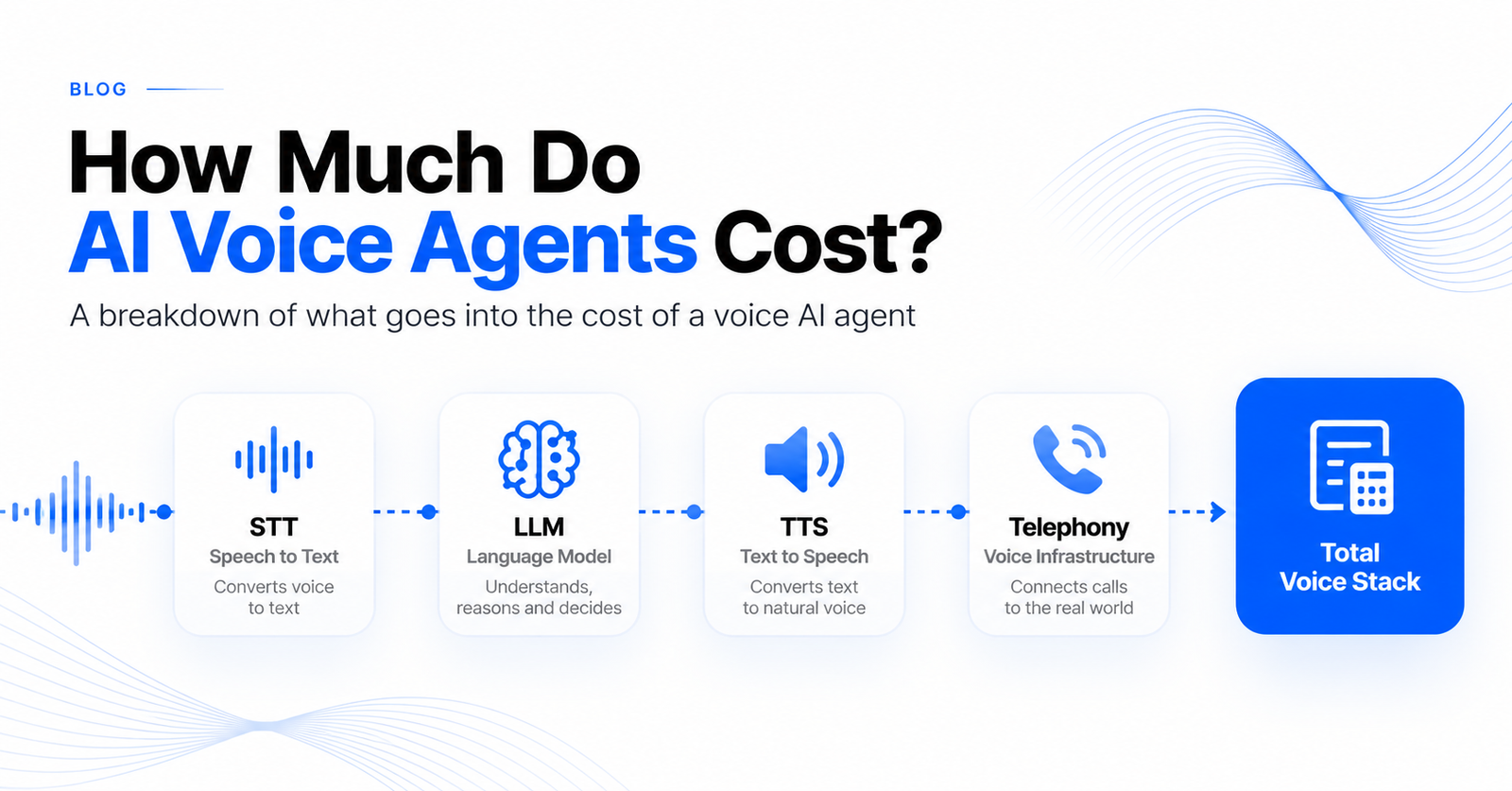
How much do AI voice agents cost? A 2026 per-minute breakdown
AI voice agent cost is the sum of four metered components — speech-to-text, the language model, text-to-speech, and telephony — so the total depends entirely on which you choose. This breakdown shows exactly what drives the number, the hidden costs to watch for, and how it compares to a human agent.
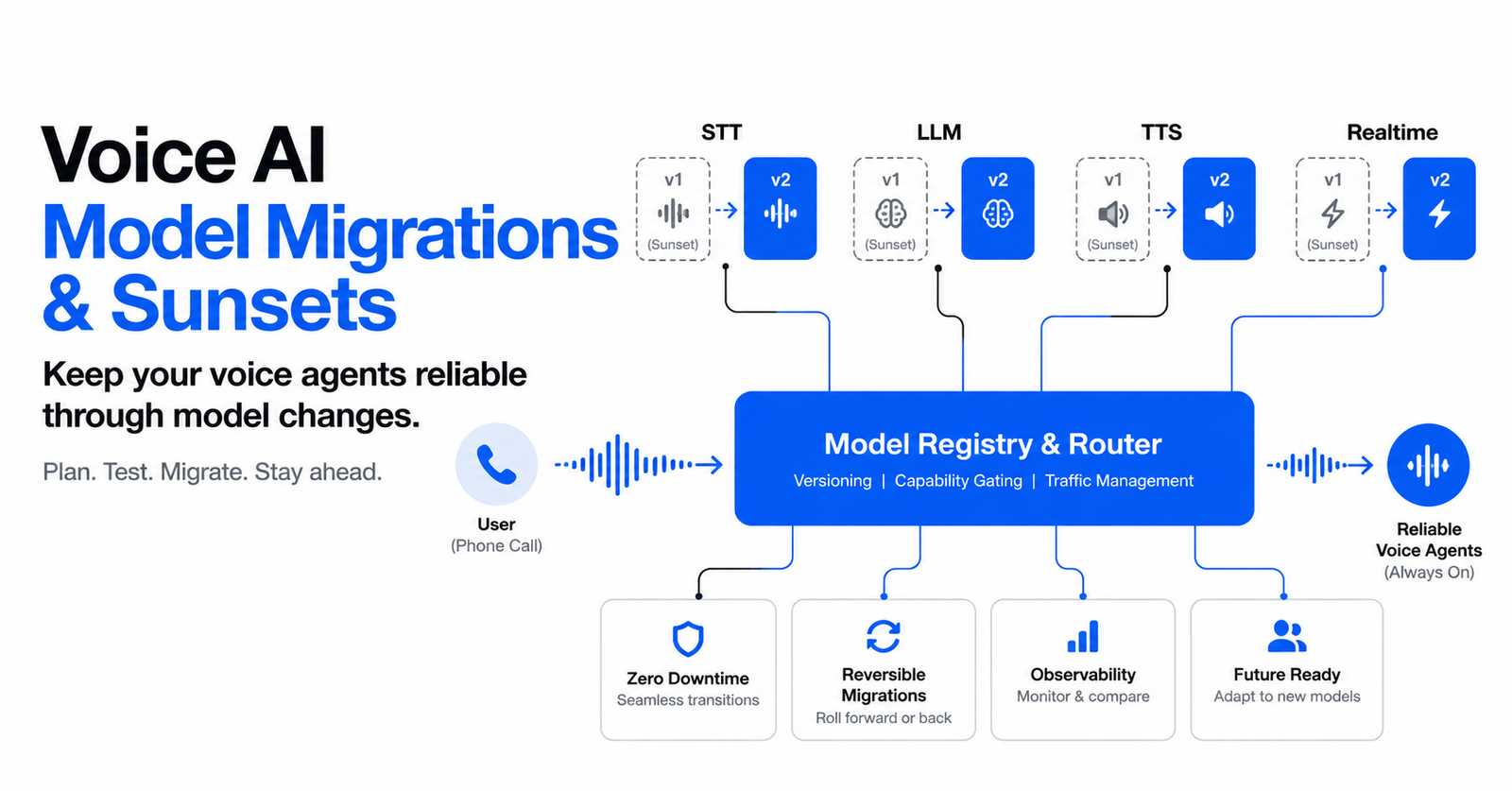
Model migrations and sunsets: how a voice AI platform keeps running when the models change under it
The models behind voice agents change every few months — new versions ship, old ones get deprecated, capabilities move around. If your platform hard-codes a model, every one of those changes is an outage. Here's how a resilient voice AI platform absorbs model churn without breaking live agents.
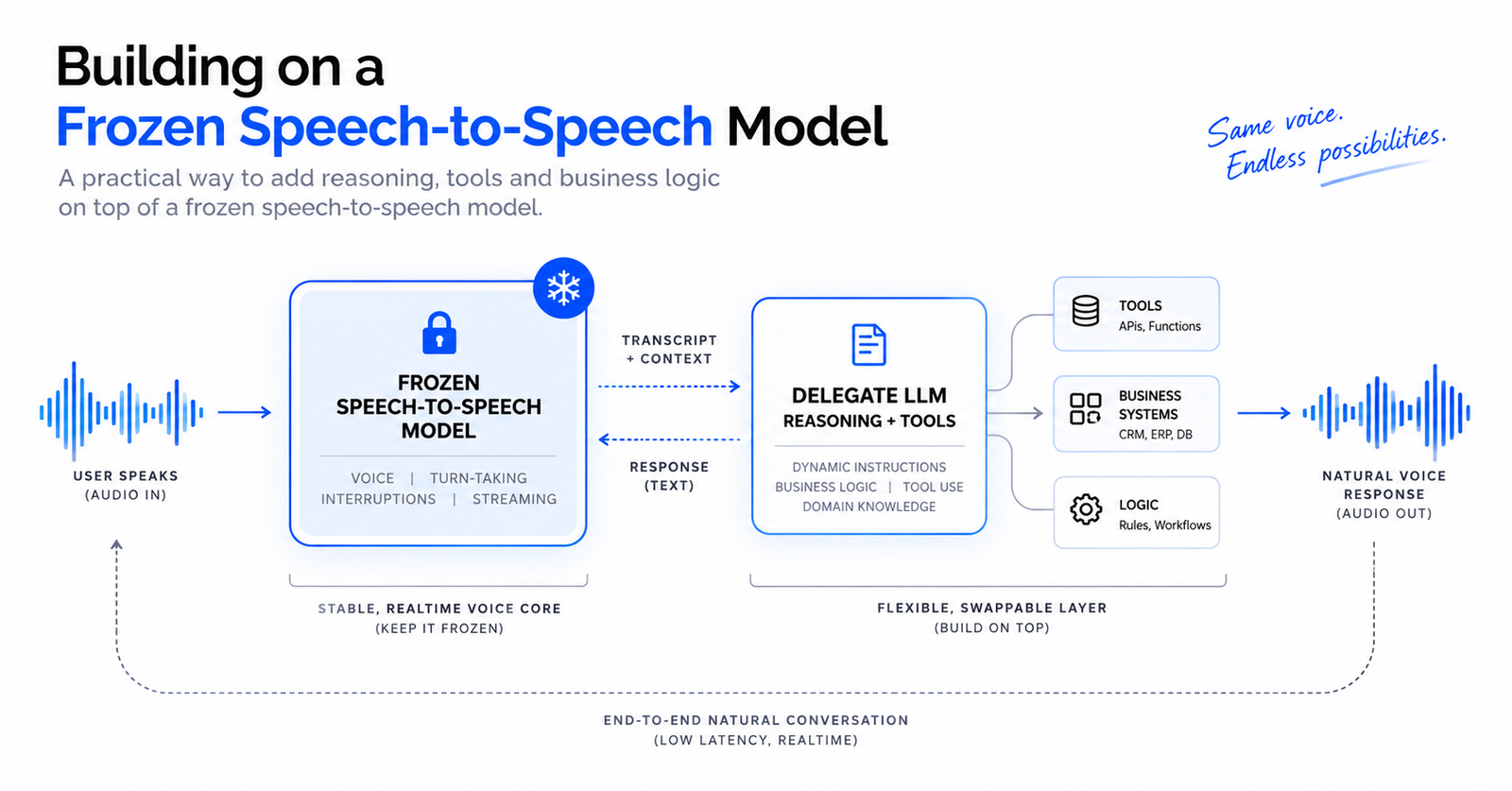
Building on a frozen speech-to-speech model: the delegation pattern behind natural voice AI
Speech-to-speech models sound remarkably human, but they hand you a locked instruction budget, no mid-call edits, and behavior you can't fully control. The way production teams get real work out of them is a delegation pattern — the live model talks, a second model does the thinking. Here's how it works and where it breaks.
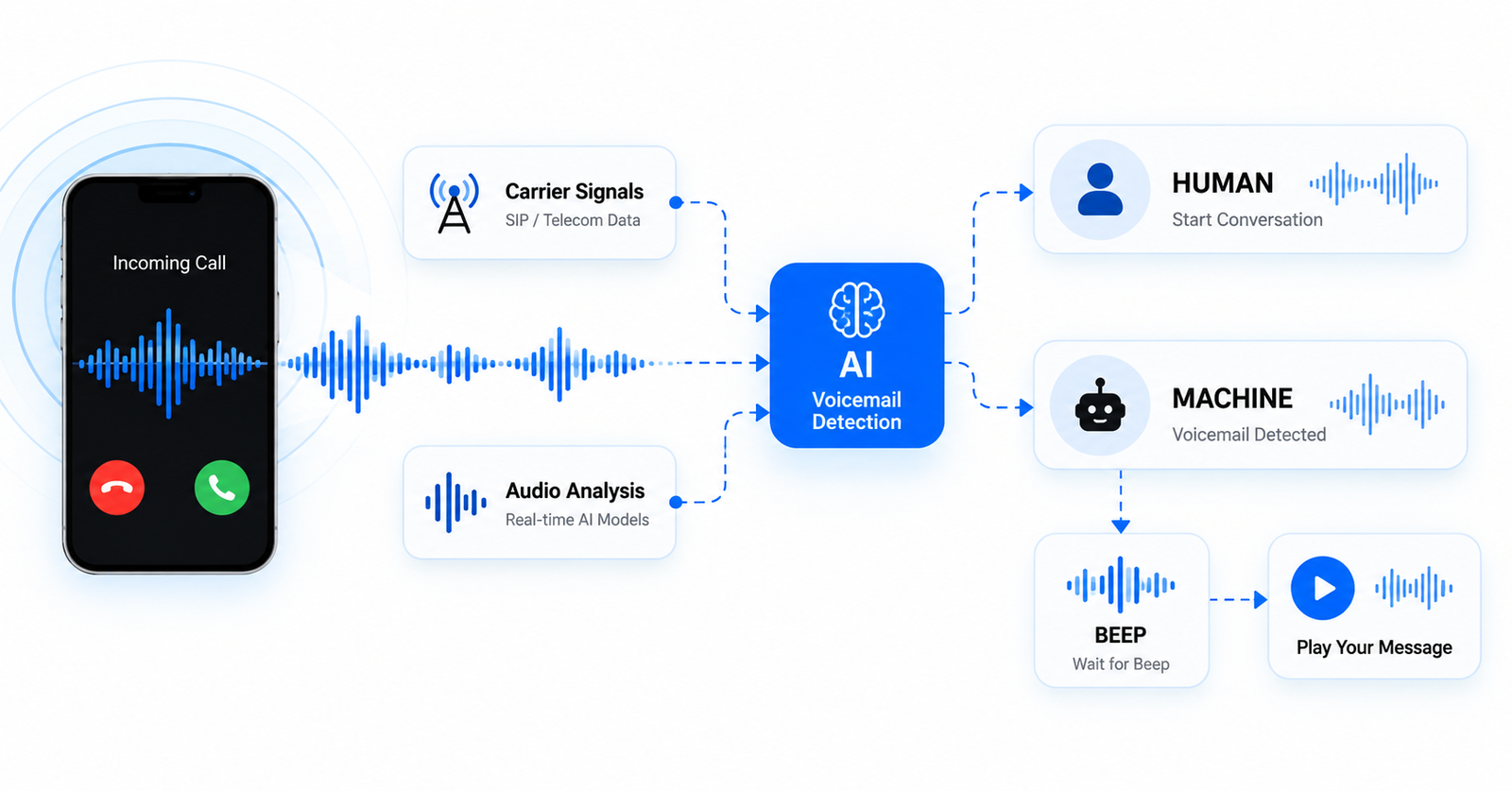
How AI voice agents detect voicemail (and why it's harder than it looks)
Answering-machine detection is the difference between a clean outbound program and one that burns minutes talking to dial tones. Here's how a production voice AI actually decides whether a human picked up — using both carrier signals and the live audio — and the edge cases that break naive implementations.
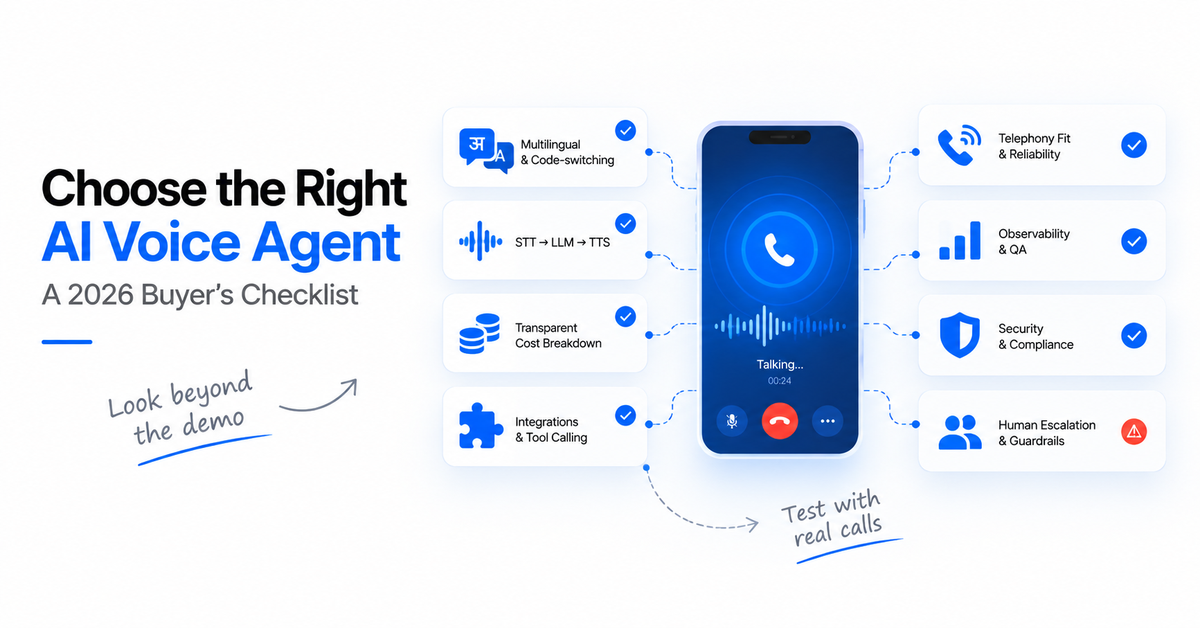
What to look for when choosing an AI voice agent in 2026
A field-tested checklist for evaluating AI voice platforms — the questions that separate an agent that ships outcomes from one that only demos well.
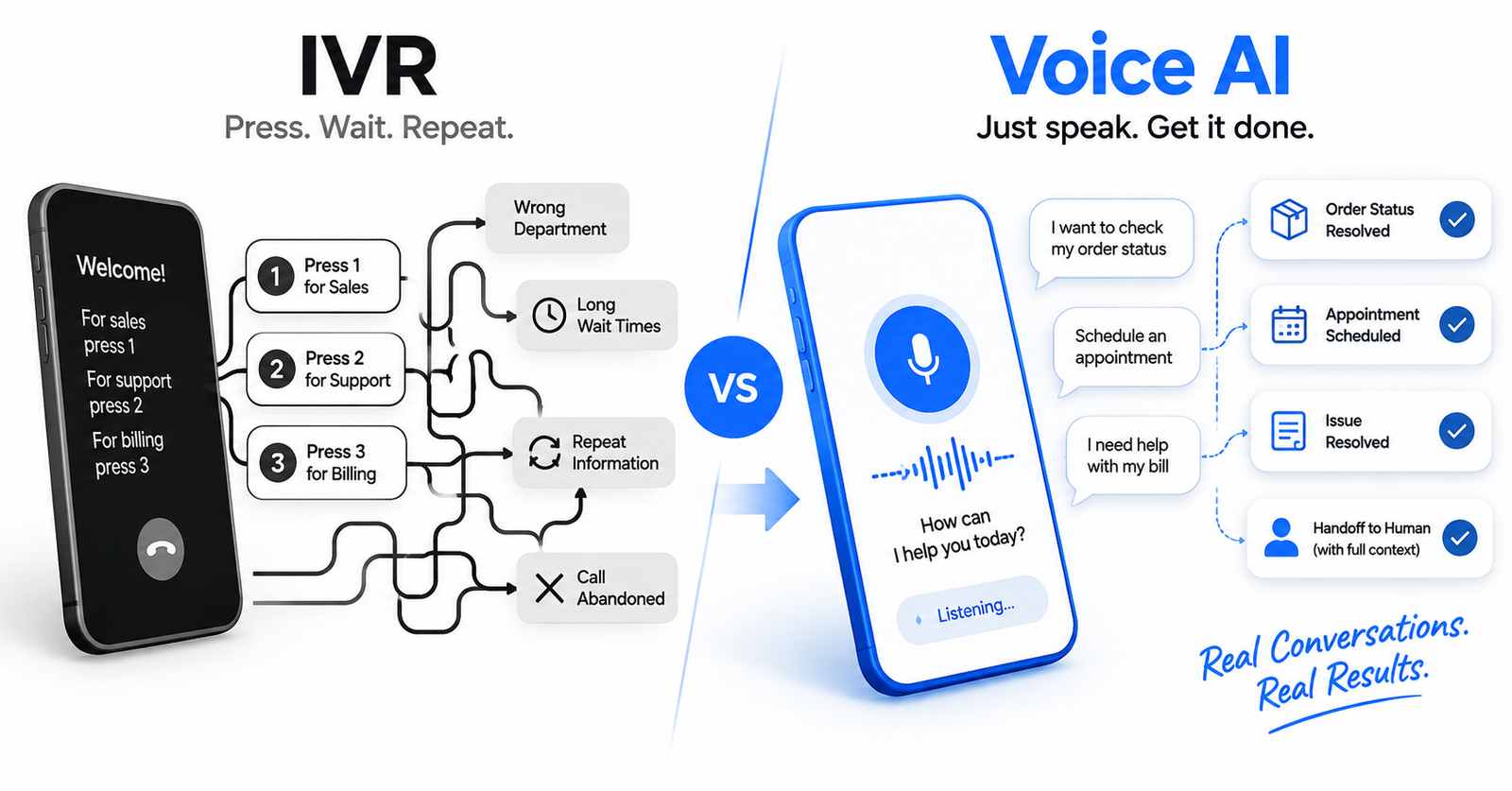
Voice AI vs IVR: why menu trees are finally dead
"Press 1 for sales" trained a generation of customers to hit zero. Conversational voice agents replace the menu with an actual conversation — and resolve the call.