

Omnichannel AI agents explained: test the seams, not the channel list
An omnichannel AI agent is one agent with one memory per customer, serving calls, WhatsApp, chat, SMS, RCS and email, and able to act across them mid-conversation. Every vendor now claims that, so the label tells you little. What separates platforms is the six seams where a journey crosses channels: identity, memory, action, events, people and consent. Here's what breaks at each, and how to test it.
Cut hold times to zero: 24/7 AI phone support
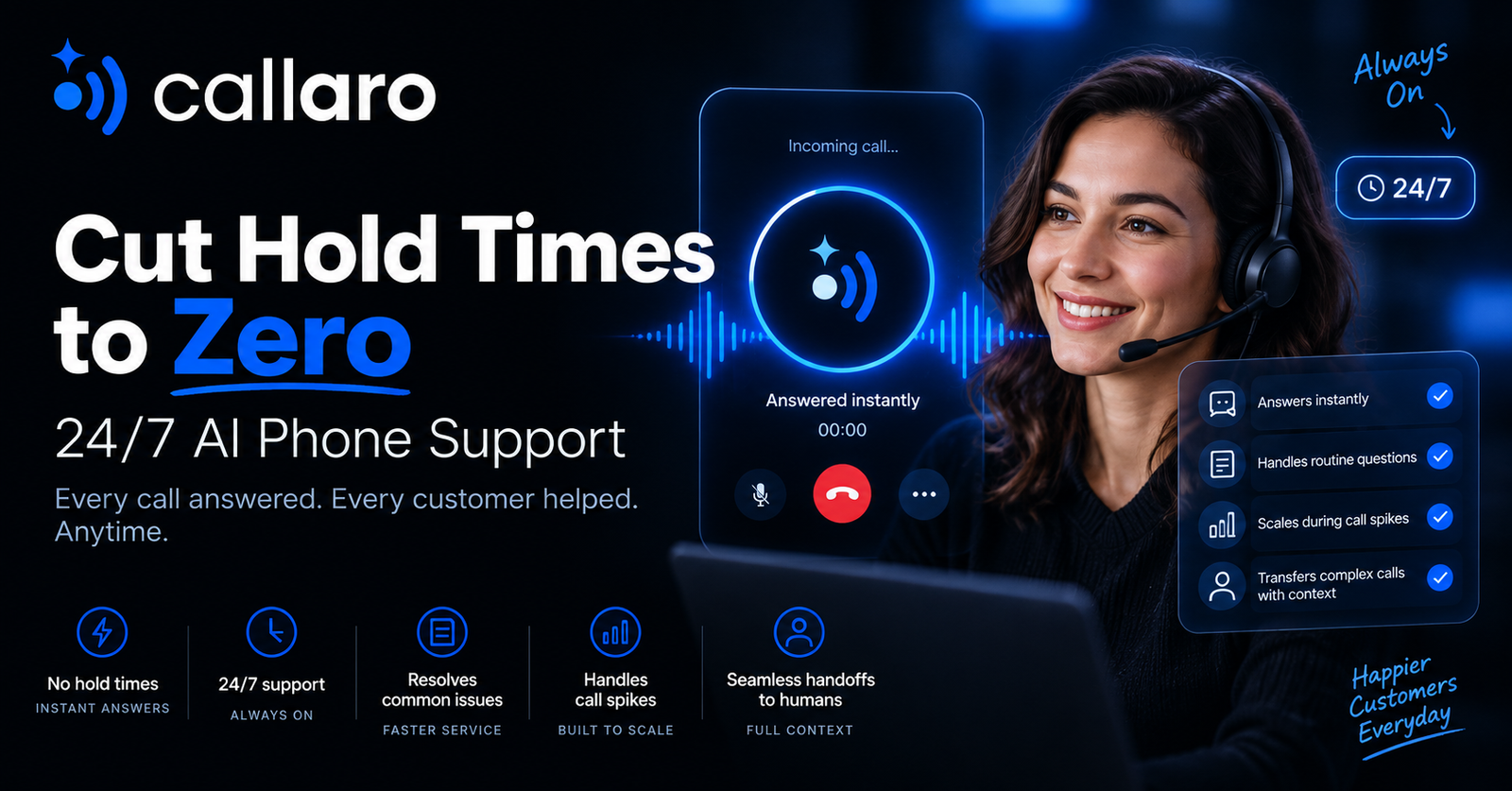
You cut hold times to zero by having an AI voice agent answer every call on the first ring, resolve routine tier-1 questions end to end, and absorb spikes and after-hours volume that would otherwise queue. The calls that genuinely need a person get a warm, context-rich transfer instead of a wait. Here's how to design it.
AI cold calling in 2026: outbound campaigns that convert
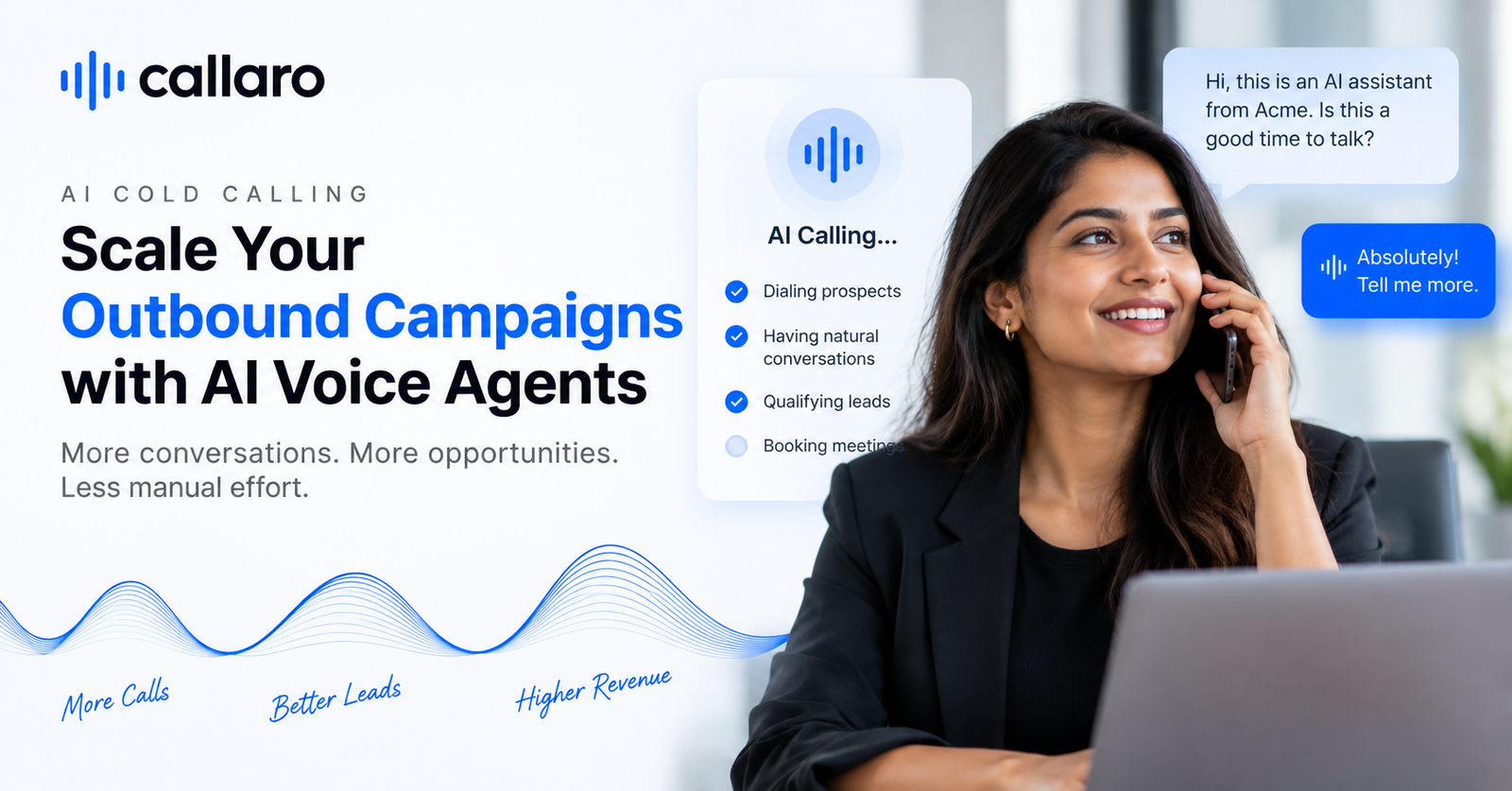
AI cold calling works when you treat it as an operations problem, not a demo. The campaigns that convert nail speed-to-lead, keep lists clean, pace concurrency to protect answer rates, respect call windows, detect voicemail so agents never pitch a machine, and hand warm prospects to humans at the right moment. Here's how to build one.
AI voice agent vs IVR vs chatbot: what's the difference?
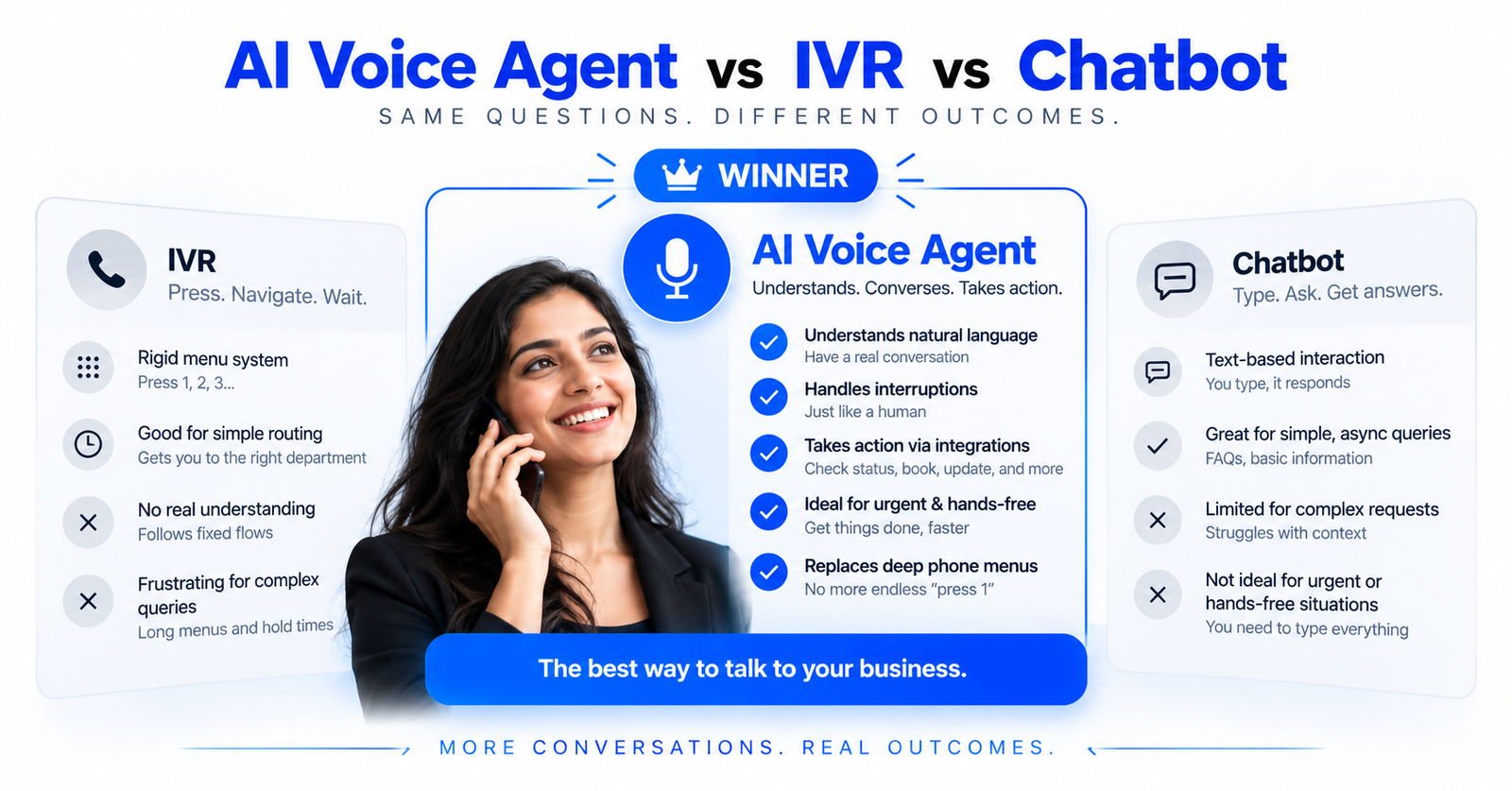
An AI voice agent holds a natural spoken conversation and takes actions on the phone; an IVR is a rigid press-1 menu tree; a chatbot handles the same kind of natural conversation but in text, not voice. Use an IVR only for simple deterministic routing, a chatbot for asynchronous text support, and a voice agent when callers want to speak and get something done.