


Gemini Live retirement: what changes for voice agents on 17 November
Google retires the Gemini API's preview Live and TTS models on 17 November 2026. Swapping in Gemini 3.8 Live is a one-line change; its new defaults for tool calls, silence and TTS prompts are not. Here is what changes, which date applies on which surface, and how to re-test each agent.

Speech-to-speech vs pipeline voice AI: choose per call, not per platform
Speech-to-speech and pipeline voice agents are no longer separated by latency. After eight days in which every pipeline stage gained a faster model and speech-to-speech systems stopped blocking on reasoning, the choice comes down to which guarantees a call needs. Here is what each path can't do, from running both in production, and a rule for choosing per call type.

Voice AI for appointment scheduling: where bookings actually break
An AI voice agent can run booking, rescheduling and confirmation calls well, but when scheduling goes wrong the call usually sounded fine: the damage is in the calendar. Here are the four failure modes we design against (phantom slots, wrong dates, double bookings and confirmations with nothing written), the fixes, and a test script to run before launch.
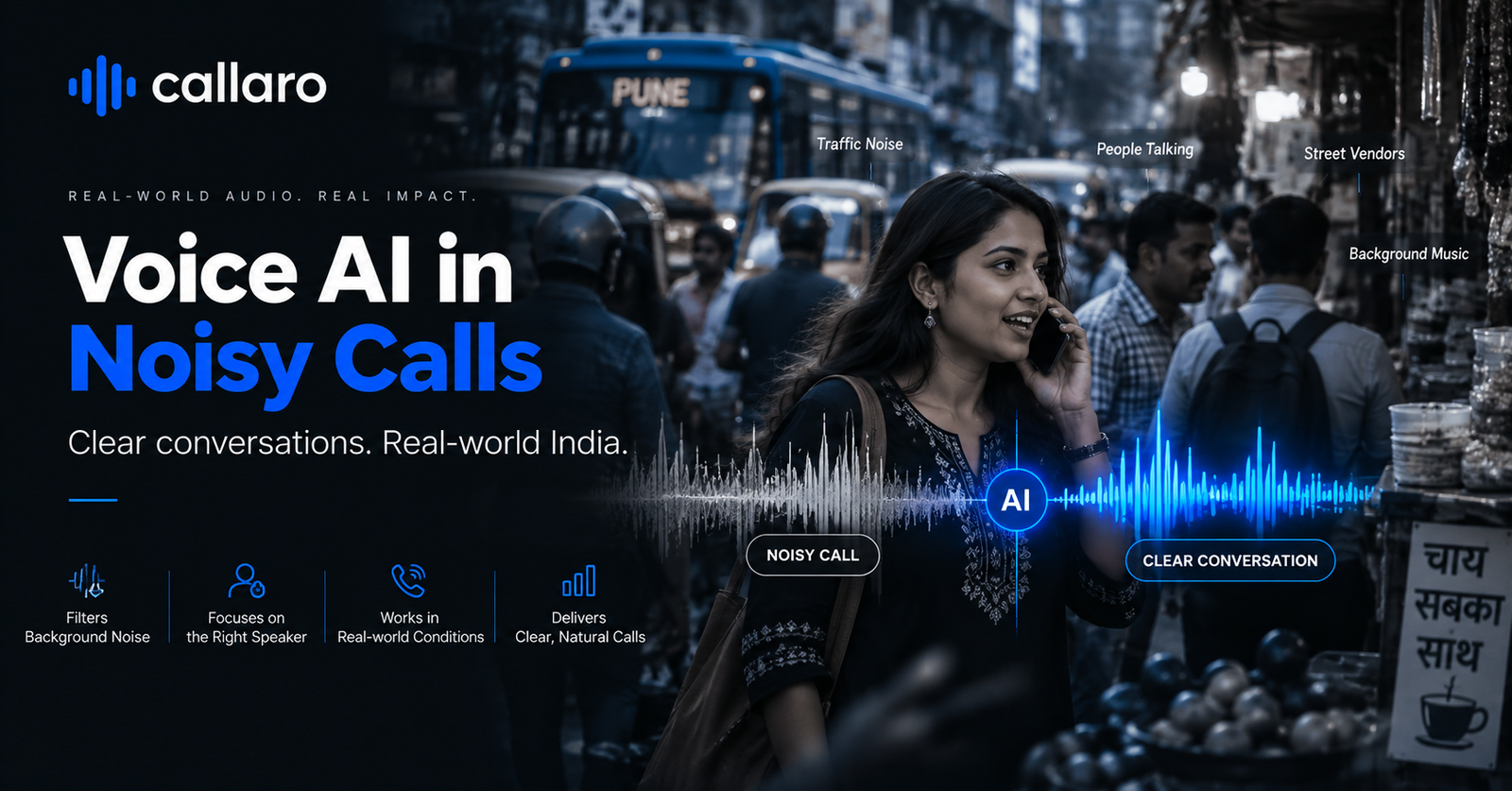
Noisy calls, clear agents: how voice AI survives real-world (and Indian) phone audio
Real phone audio is nothing like a demo mic. Street noise, a TV in the next room, two people talking, and low-bitrate carrier codecs all conspire to break naive voice AI. Here's the actual DSP — echo cancellation, a dual-path denoiser design, VAD tuning, and background-media rejection — that keeps an agent clear on messy Indian PSTN calls without clipping soft speech.
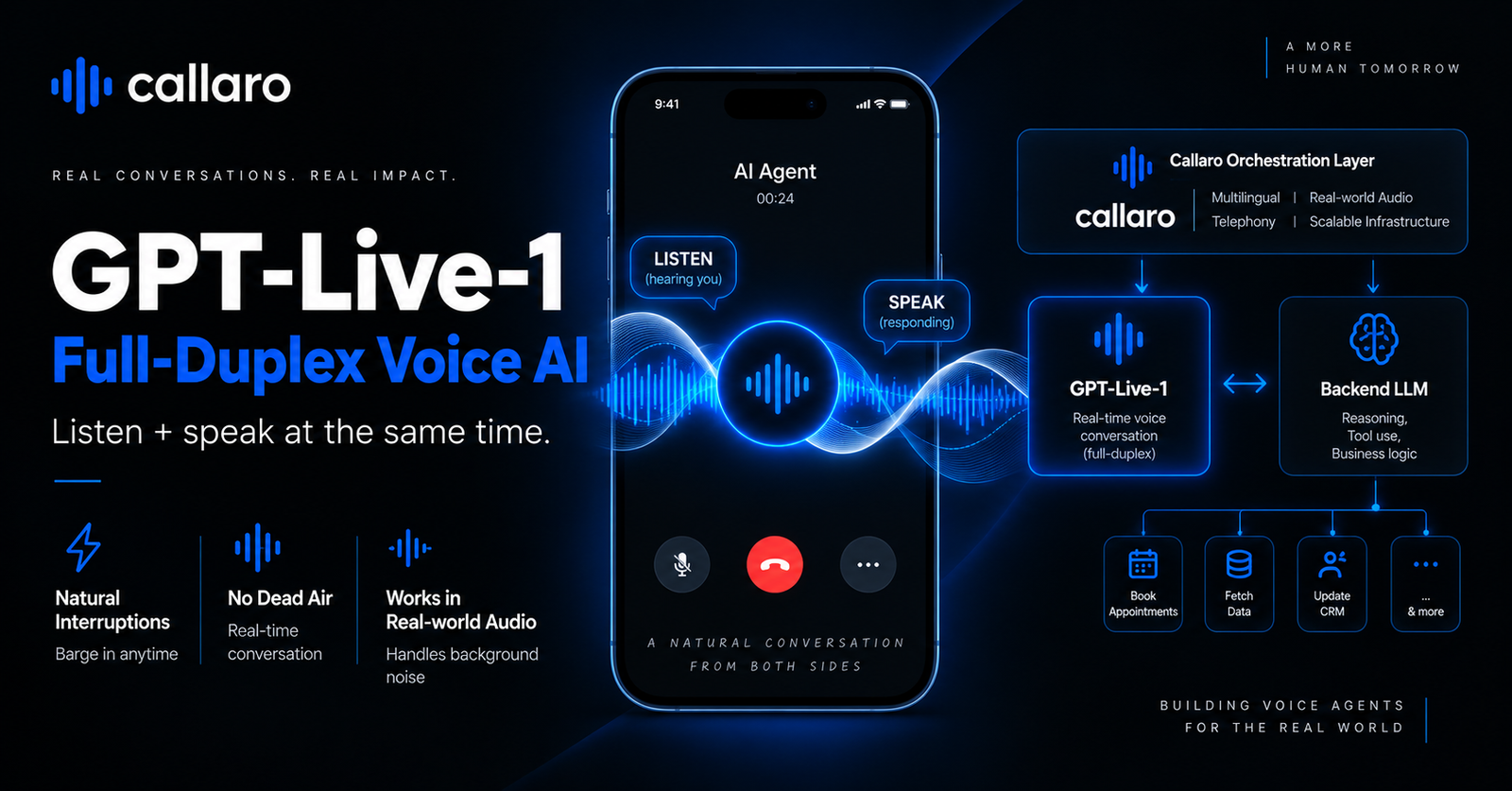
GPT-Live-1: full-duplex voice AI, and why Callaro was live with it on day one
OpenAI launched GPT-Live-1 on September 10, 2026 — a full-duplex speech model that listens and speaks at the same time and delegates reasoning to a backend of your choosing. Callaro has run it in production since launch day. Here's what full-duplex changes, and why it makes for the most natural AI voice agent yet.
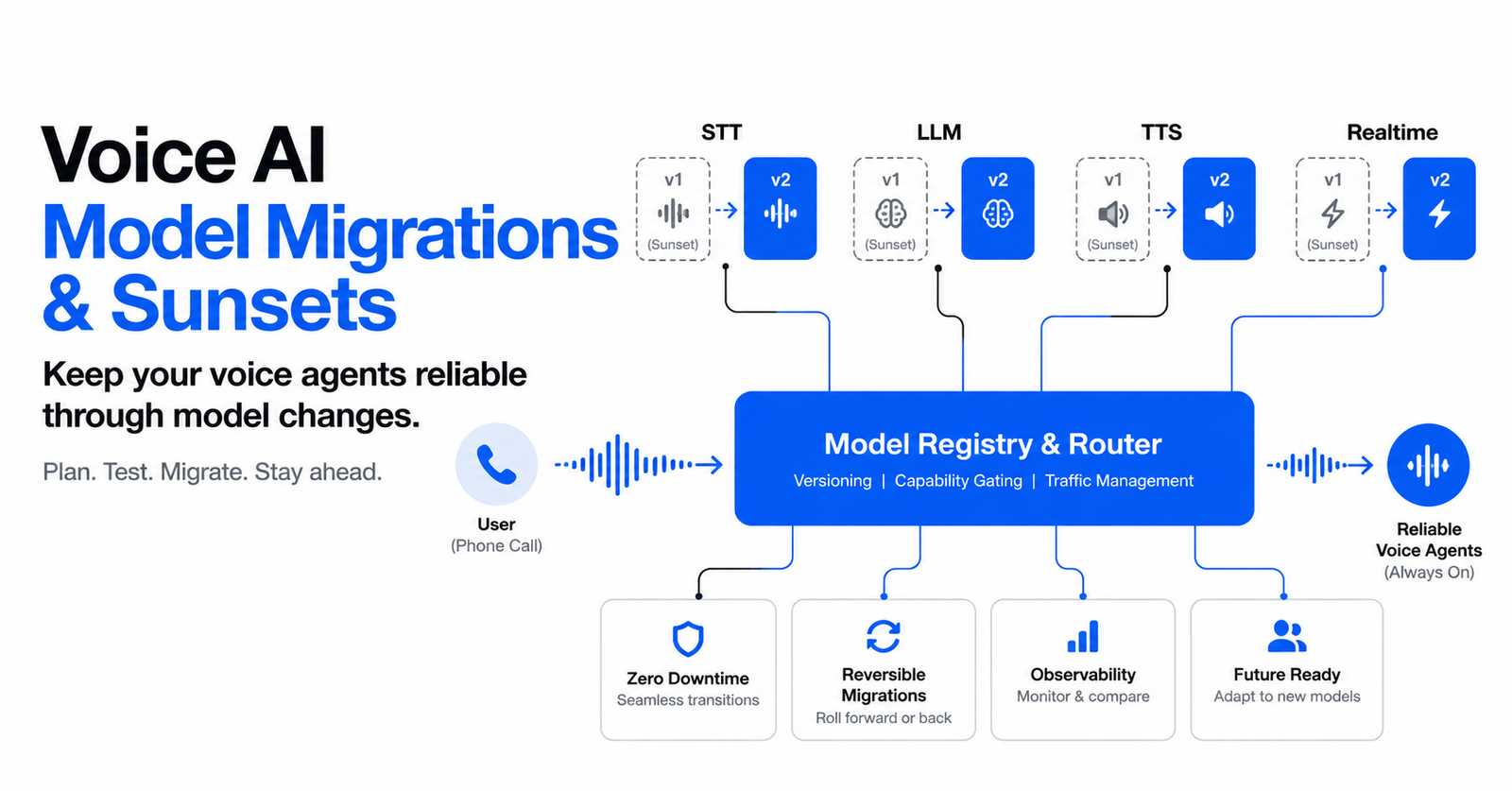
Model migrations and sunsets: how a voice AI platform keeps running when the models change under it
The models behind voice agents change every few months — new versions ship, old ones get deprecated, capabilities move around. If your platform hard-codes a model, every one of those changes is an outage. Here's how a resilient voice AI platform absorbs model churn without breaking live agents.
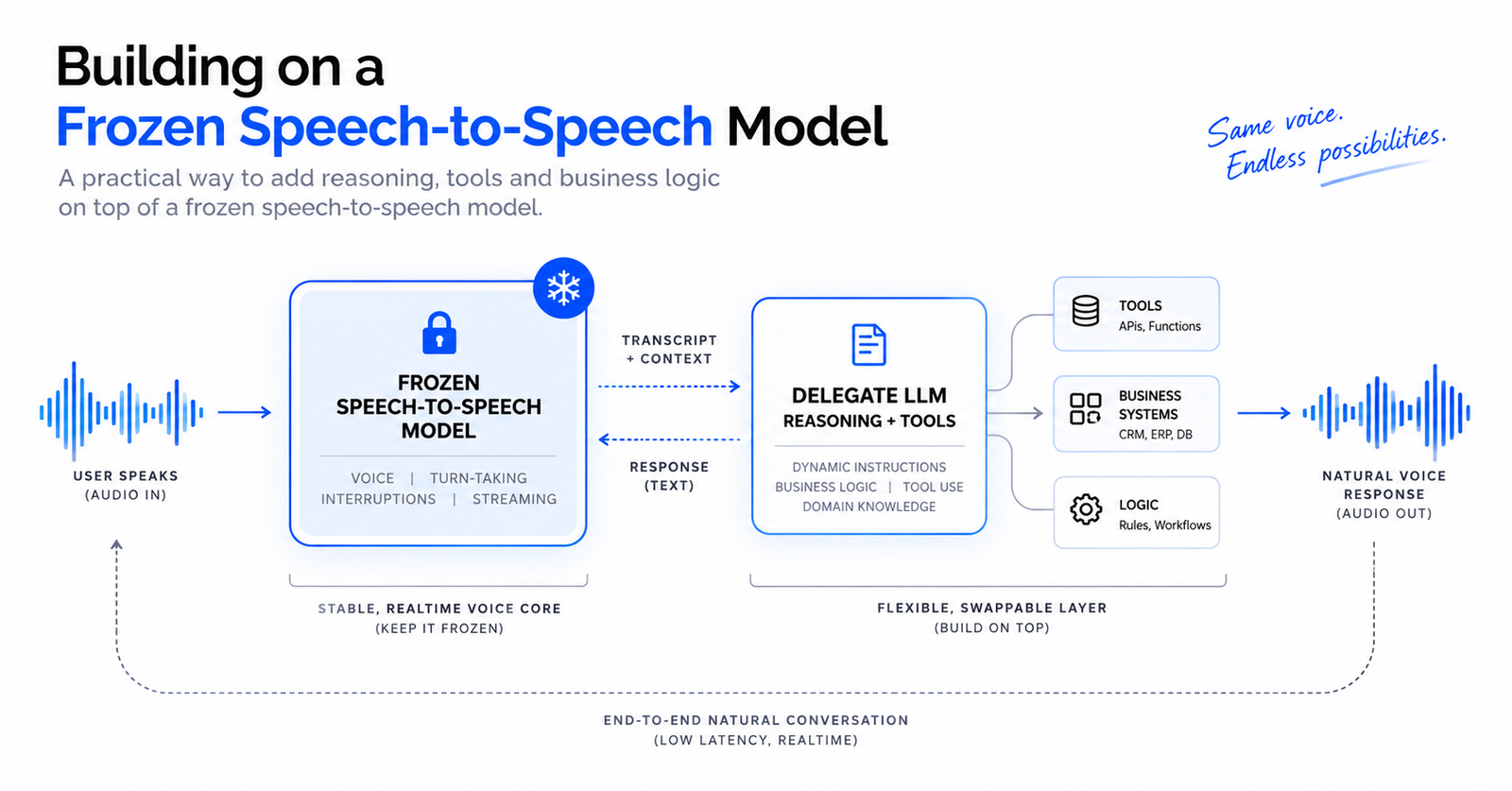
Building on a frozen speech-to-speech model: the delegation pattern behind natural voice AI
Speech-to-speech models sound remarkably human, but they hand you a locked instruction budget, no mid-call edits, and behavior you can't fully control. The way production teams get real work out of them is a delegation pattern — the live model talks, a second model does the thinking. Here's how it works and where it breaks.
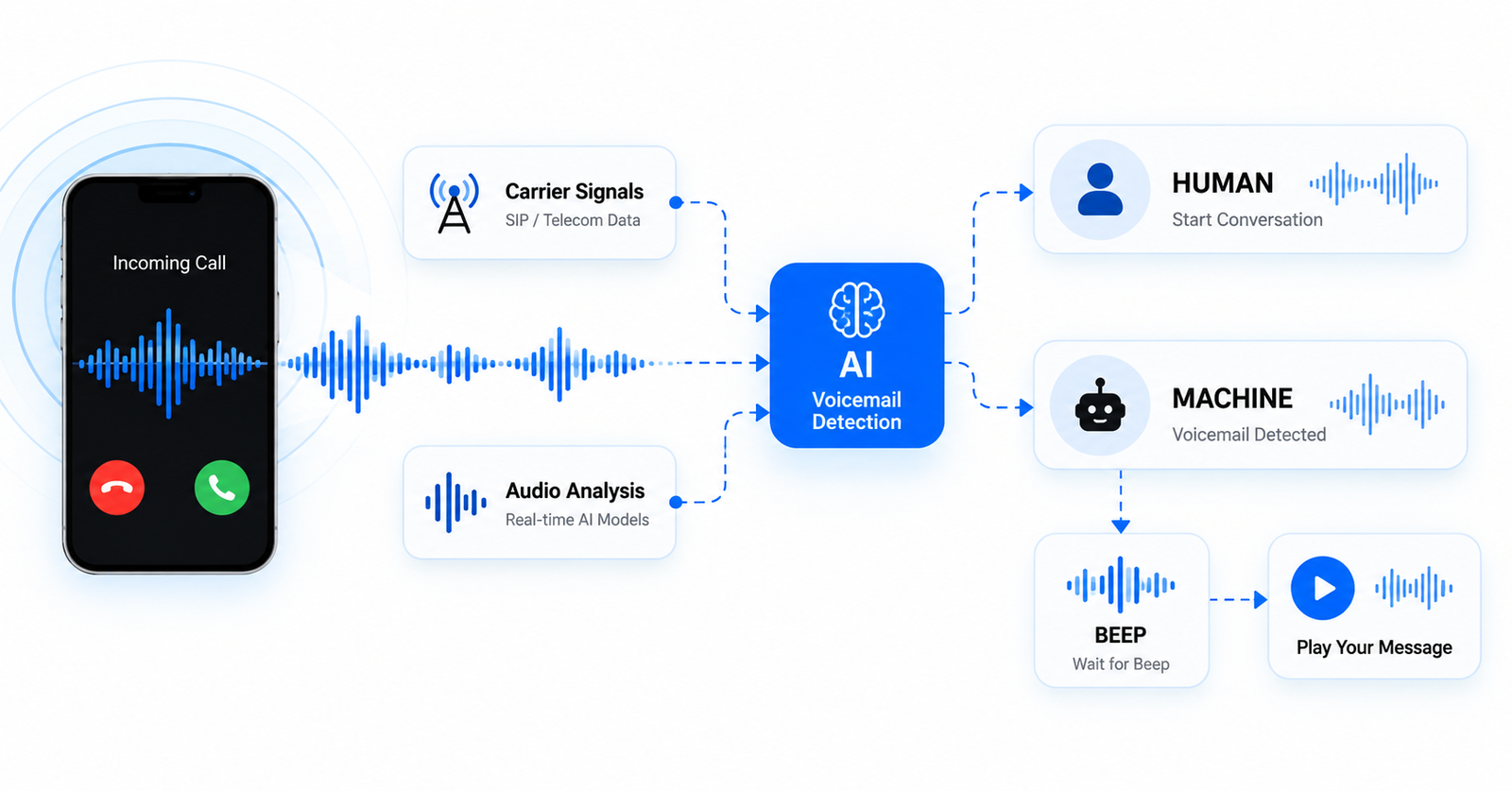
How AI voice agents detect voicemail (and why it's harder than it looks)
Answering-machine detection is the difference between a clean outbound program and one that burns minutes talking to dial tones. Here's how a production voice AI actually decides whether a human picked up — using both carrier signals and the live audio — and the edge cases that break naive implementations.