


Voice AI for travel: build the agent for disruption day
Voice AI earns its place in travel on the day a trip goes wrong, when call volume jumps and the phone queue fails. Build the agent for that day: call the travellers your notices missed, recognise the booking without asking anyone to spell a reference, offer only what your reservation system returns, and keep entitlement rules out of the model.

TRAI's A2P call rules for AI voice agents: declare the numbers, fix the behaviour
TRAI's Third Amendment, notified on 18 September 2026, doesn't ban AI calls in India or make agents announce themselves. It makes outbound automated calls declarable: you tell your operator which number ranges carry them, and operators' detection systems watch how those numbers behave. Here's what the text says, the three dates, and the campaign changes that keep your numbers clean.

Voice AI for university admissions: stop summer melt
Voice AI does its most valuable work in university admissions after the offer. The students you lose are admits who never arrive, stalled by a missing document, a finance question or a visa delay. Here's how to call every admit against your deadline calendar, get past call screening, route each blocker to the right office and measure melt honestly.

Voice AI for lead qualification: design the scorecard before the script
Voice AI qualifies leads well when you treat qualification as a data problem, not a script problem: define a typed scorecard, capture each answer the moment it's given, give every outcome a destination, and audit the agent's verdicts against your reps every week. Here's the playbook, and the metric most teams get wrong.

AI cold calling in 2026: outbound campaigns that convert
AI cold calling works when you treat it as an operations problem, not a demo. The campaigns that convert nail speed-to-lead, keep lists clean, pace concurrency to protect answer rates, respect call windows, detect voicemail so agents never pitch a machine, and hand warm prospects to humans at the right moment. Here's how to build one.
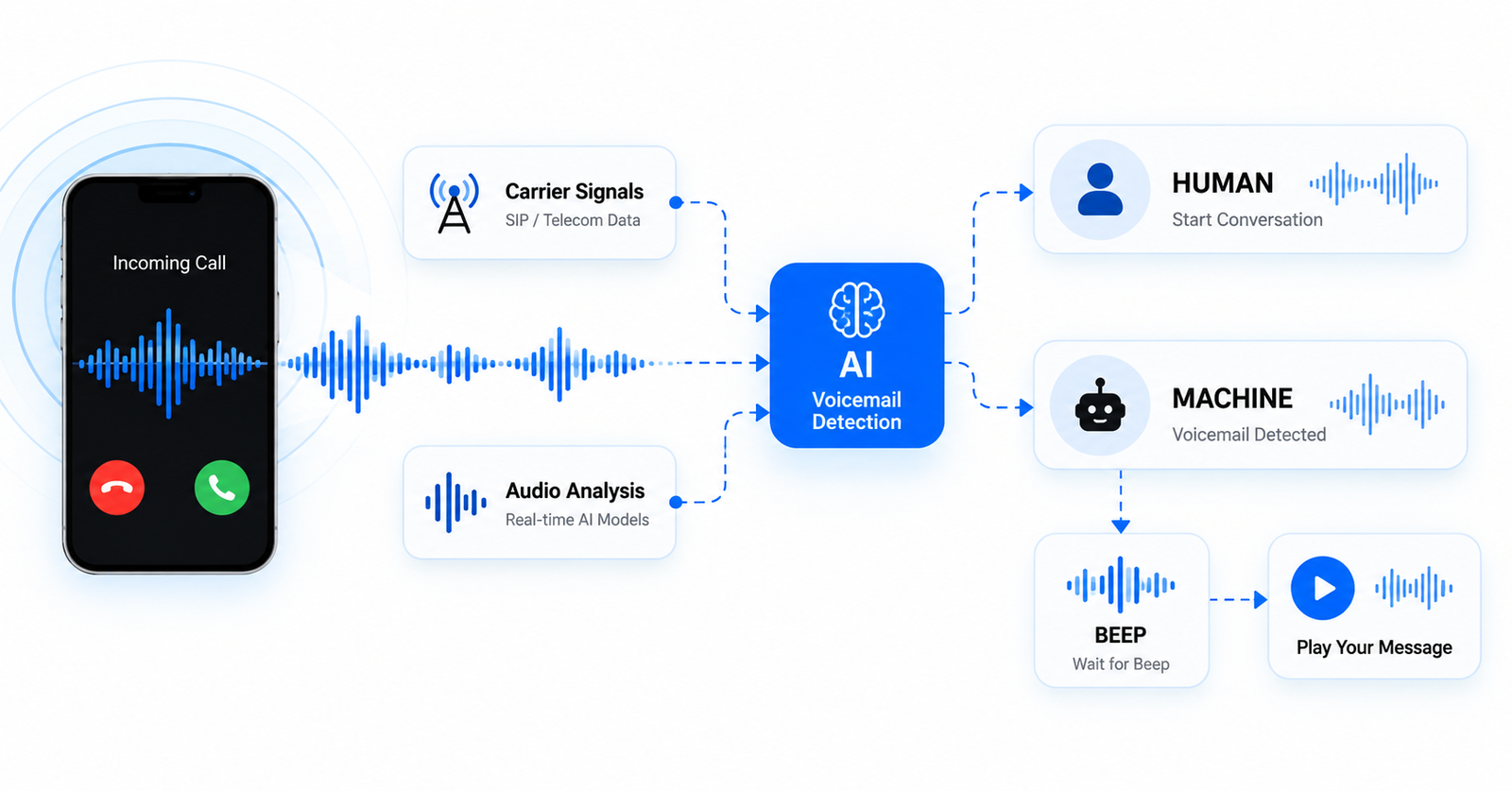
How AI voice agents detect voicemail (and why it's harder than it looks)
Answering-machine detection is the difference between a clean outbound program and one that burns minutes talking to dial tones. Here's how a production voice AI actually decides whether a human picked up — using both carrier signals and the live audio — and the edge cases that break naive implementations.